IPTV vs. Cable TV: Which is better in 2026?

TV viewing in Sweden has changed radically in recent years, and in 2026 many households will face the same question: should they keep the traditional cable TV solution or switch to IPTV? Both options have their advantages, but the differences in price, flexibility and channel selection make the choice more important than ever.
In this guide, we’ll go over what distinguishes IPTV vs. cable TV , which option provides the most value for money, and how to choose the right solution for your household.
What is IPTV and what is Cable TV?
Before we compare, it’s worth understanding the basics of each technology.
How IPTV works
IPTV (Internet Protocol Television) delivers TV content over the internet instead of via satellite or cable networks. With a stable broadband connection, you can stream thousands of channels, movies and series directly to your TV, mobile, computer or streaming box. It is the same technology behind many modern streaming services, but with a focus on live TV channels.
How traditional cable TV works
Cable TV is delivered via a physical cable network from an operator and usually requires a fixed installation, a TV box from the provider and a binding agreement. The channel selection is predetermined in packages, and any add-ons usually involve a higher monthly cost.
Price: IPTV vs Cable TV
One of the biggest reasons why Swedish households opt out of cable TV is the cost. Traditional cable TV often involves:
- Monthly fees of several hundred kronor
- Extra cost for sports channels or premium packages
- Installation fees and long commitment periods
A good IPTV service usually costs significantly less per month, while giving you access to more channels and content from more countries. For those who compare iptv price 2026 to a cable TV subscription, the difference is often clear after just a few months.
Channel selection and content
Cable TV operators usually offer fixed packages with a limited number of channels depending on the subscription level. If you want more channels, you have to pay for a more expensive package.
IPTV services often offer thousands of channels, including Swedish, Nordic and international options, as well as movies and series on demand. If you want to stay up to date on which channels and streaming services are most relevant right now, you can read our TV channels and streaming guide for 2026/27 , where we review the best options on the market.
Image quality and reliability
A common question is whether IPTV buffering or interruptions are a problem compared to cable TV. The answer largely depends on your internet connection.
- Cable TV is less dependent on internet speed because the signal comes via a dedicated network.
- IPTV requires a stable broadband connection, preferably at least 15–25 Mbps for HD content without buffering.
With a reliable provider and sufficient bandwidth, the difference in picture quality between IPTV and cable TV is marginal today, and many IPTV services now offer HD and 4K content.
Flexibility and availability
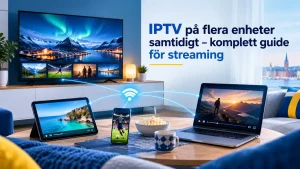
This is where IPTV really stands out. Unlike cable TV, which is tied to a physical connection in the home, IPTV can be used on multiple devices simultaneously – TV, mobile, tablet or computer.
If you want to use IPTV on Apple devices, it’s easy to get started. We have a complete guide on how to run IPTV on Apple TV that shows you step by step how to install and configure the service.
This flexibility makes IPTV an attractive option for families who want to watch different content at the same time, or for those who travel a lot and want access to your channels regardless of location.
Sports and live broadcasts
For many Swedish viewers, sports are a deciding factor in choosing between IPTV and cable TV. Traditional cable TV often requires expensive sports add-ons to access football, hockey and other live broadcasts.
With a good IPTV service, you can instead access sports, movies and series in the same package. Read more about how you can experience every goal and every story with sports and movies online to see what options are available.
Which option suits you best?
The choice between IPTV and cable TV depends on your needs:
Choose cable TV if you:
- Have limited or unstable internet connection
- Prefer a simple, predetermined channel package
- Not interested in streaming on multiple devices
Choose IPTV if you:
- Want a larger channel selection at a lower cost
- Want to watch on multiple devices at the same time
- Want flexibility without commitment
- Interested in sports, movies and series in the same subscription
If you want to see more examples of how Swedish viewers stream movies and series today, you can read the best way to watch movies and series in Sweden for more inspiration.
FAQs about IPTV vs Cable TV
Is IPTV cheaper than cable TV?
Yes, in most cases IPTV is cheaper per month than traditional cable TV, while often giving you access to more channels and content.
Is IPTV legal in Sweden?
Using an IPTV service itself is not illegal, but it is important to choose a provider that distributes content in a proper manner. Always check that the service you choose is reputable.
Do I need fast broadband to use IPTV?
Yes, for a good experience without buffering, at least 15-25 Mbps is recommended, especially if multiple devices are used simultaneously in the home.
Can I use IPTV on multiple devices at the same time?
Yes, most IPTV services support multiple devices, including TV, mobile, tablet, and streaming boxes like Apple TV.
Is the picture quality worse with IPTV than cable TV?
No, with a stable internet connection and a reliable provider, IPTV can offer the same or better picture quality, including HD and 4K.
What happens if I switch from cable TV to IPTV?
Most people experience a wider range of channels, lower cost and more flexibility, with no commitment time or installation requirements.
Is IPTV a good option for sports fans?
Yes, IPTV often includes sports channels and live broadcasts in the same package, making it a cost-effective alternative compared to expensive sports add-ons from cable TV operators.
Conclusion
When we compare IPTV vs. cable TV in 2026, it is clear that IPTV offers more flexibility, a wider range of channels and often a lower price. Cable TV can still be a good choice for those with limited internet access or prefer a simple, traditional solution – but for most Swedish households who want freedom of choice, sports, movies and series in one subscription, IPTV is the stronger option.
Regardless of which choice you make, the most important thing is to choose a reliable provider with stable operations and good customer support, so that you get the most out of your TV experience in 2026.
Table of Contents

Lucas Morgan
I am Lucas Morgan, a professional writer and digital entertainment enthusiast focused on modern television, streaming technology, and online viewing trends. Through clear and informative content, I help readers understand new platforms, devices, and smarter ways to enjoy entertainment across multiple screens.